
In the food industry, bronze is risky. Where metal rotates on metal, microscopic wear occurs over time. With a bronze nut, this can cause minuscule metal particles or bronze dust to release, carrying the risk of product contamination. An FDA-approved plastic nut prevents this. Furthermore, plastic operates without external lubricating grease (dry running), which additionally safeguards hygiene—or food-safe lubricating greases are used, which is even much better than dry running.
In mechanical engineering, bronze is often the standard, rather than plastic trapezoidal nuts. However, there are specific sectors and environments where bronze falls short, and this is where customers choose plastic. When do you make that switch?
1. The Food Industry (Hygiene)
(See paragraph above regarding contamination and FDA approval).
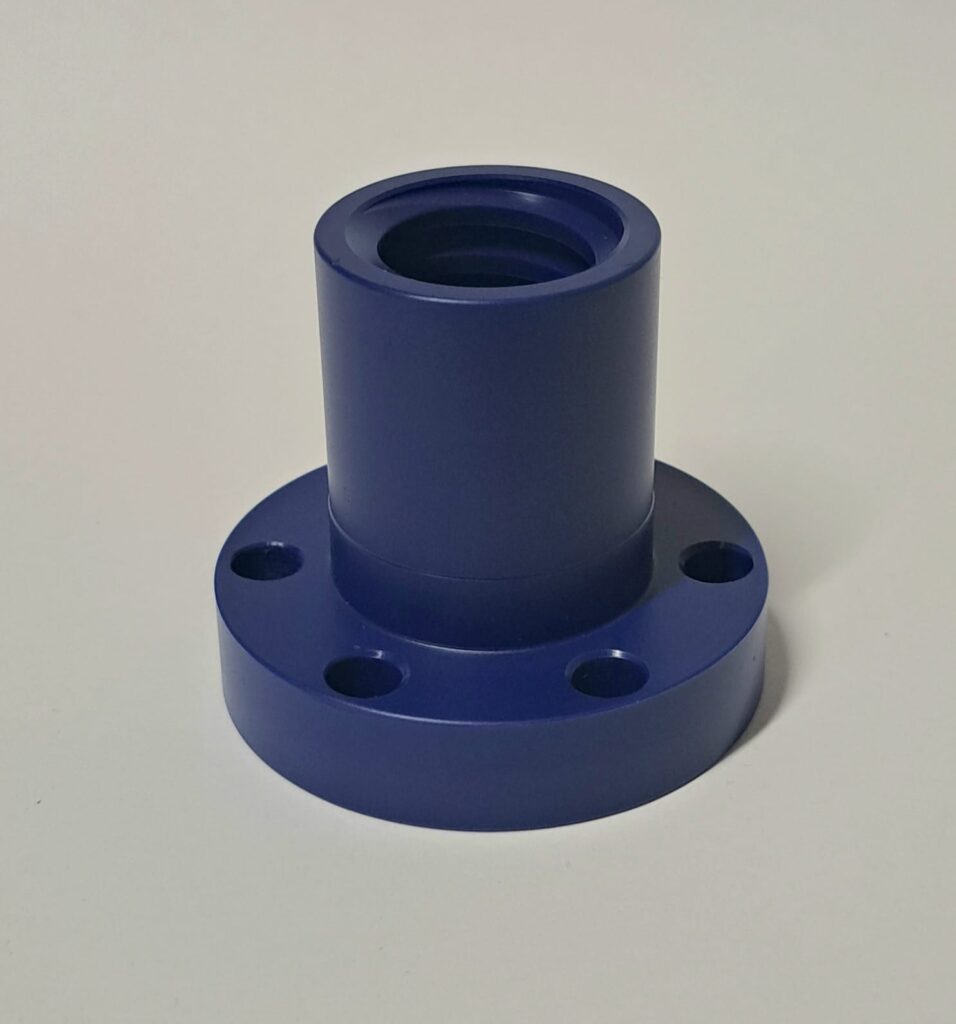
2. Aggressive Chemical Environments (Corrosion)
Bronze is sensitive to certain chemicals. Take swimming pool technology, for example: constant exposure to chlorine quickly corrodes metals. In such aggressive environments, a high-performance plastic like PEEK offers the perfect solution. This material is extremely chemically resistant and immune to chlorine corrosion.
3. Water Management (Moisture and Outdoor Air)
In water management applications (such as sluices, pumps, or water treatment plants), bronze suffers from corrosion, and lubricating underwater is difficult. PETP+SL is frequently chosen here. This plastic absorbs virtually no moisture, retains its shape, and runs smoothly without releasing grease into the water.
But Beware: Know the Limits of Plastic
Although plastic is chemically and hygienically superior, bronze remains better in terms of wear resistance and heat resistance. Plastic can only replace bronze if the forces and operating time are limited:
- Fewer kilograms (surface pressure): Bronze is stronger. Under heavy loads or high peak loads, plastic can heat up or deform.
- Limited duration (duty cycle): Friction generates heat. Bronze dissipates this easily, but plastic acts as an insulator. With a high duty cycle (continuous operation), plastic becomes too hot and loses its strength.
In short: Do heavy loads need to be moved continuously? Then bronze remains the choice. Are the forces manageable and the movements periodic, but are you dealing with hygiene, chlorine, or water? Then plastic (PETP+SL or PEEK) is the smart solution.
Unsure which material is best suited for your specific practical environment? The team at Trapeziumdraad.nl is happy to brainstorm and calculate along with you!